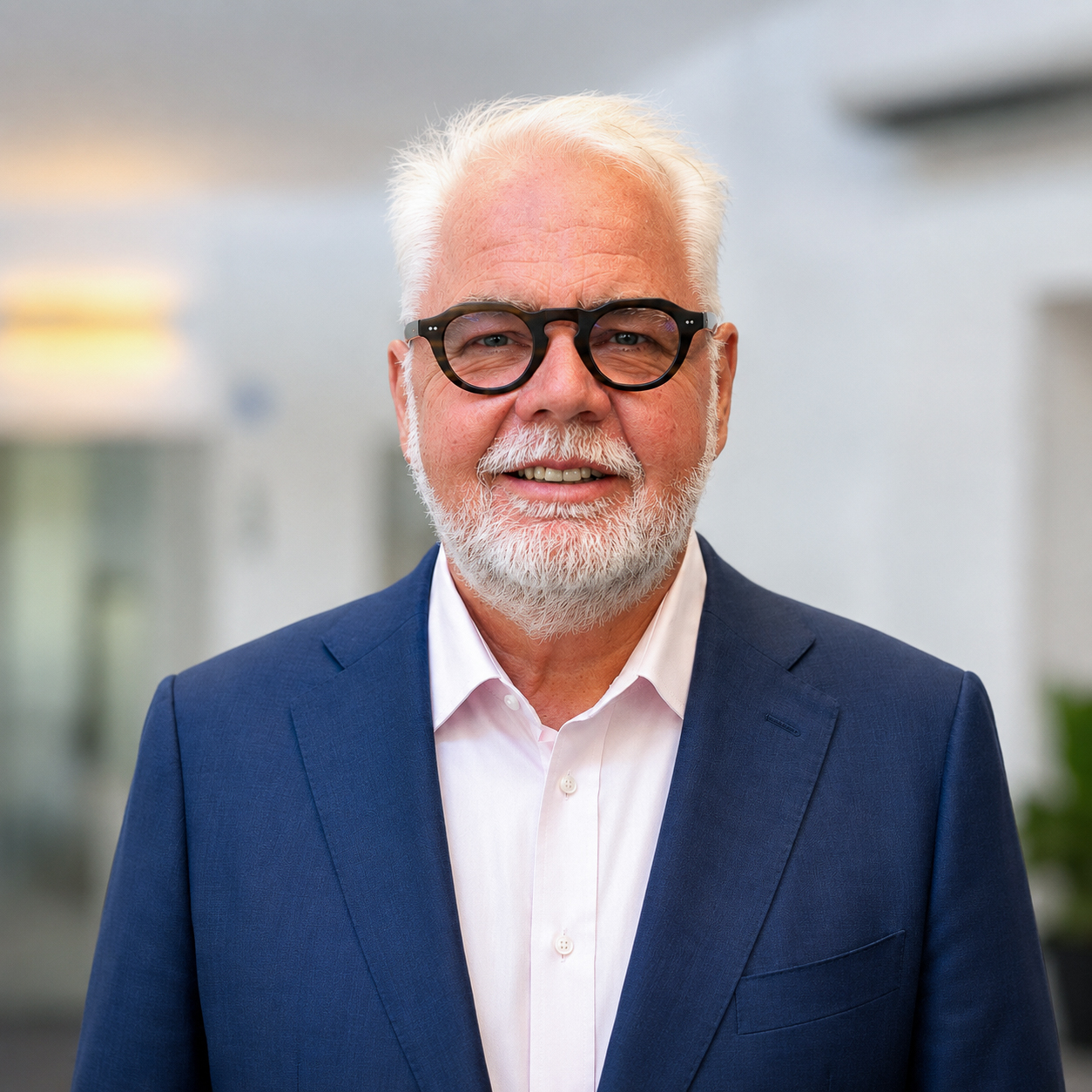
Stephen Rayment
Founder, CEO & Group Managing Director
Founder, CEO & Group Managing Director
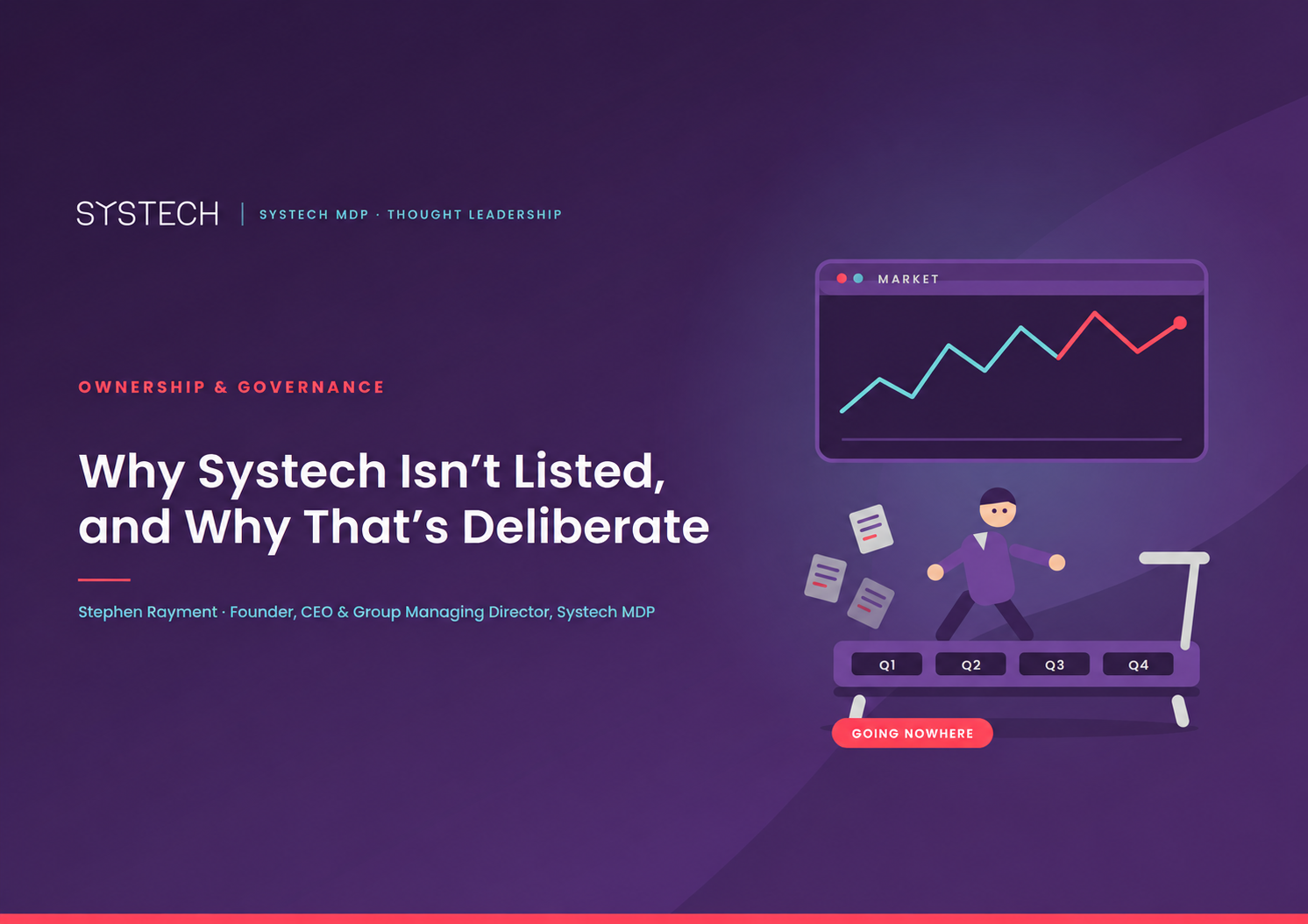
Stephen Rayment · Founder, CEO & Group Managing Director, Systech MDP
Going public is often treated as the natural next step for a growing professional services business, a marker of scale and credibility. We take a different view. Staying privately owned isn’t something Systech has settled for; it’s a structural choice that gives us regulatory and financial room that listed competitors simply don’t have. Here’s what that actually means.
A public listing doesn’t just change who owns the shares. It triggers an entire compliance regime that follows the business into every decision.
Continuous disclosure. Listed companies must disclose financial performance, material developments and strategic plans to the market on a running basis. For a consultancy built on client confidentiality, that’s a real tension: information that would ordinarily stay inside a client relationship can end up in a public filing simply because it’s “material” to shareholders.
Quarterly reporting cycles. Even where quarterly reporting isn’t strictly mandatory, listed companies operate under constant pressure to show progress every reporting period. The UK’s own Kay Review flagged this directly: frequent, short-cycle reporting pushes boards toward decisions that look good in three months rather than ones that are right for clients and staff over three years.
Governance overhead. Sarbanes-Oxley-style internal control requirements (or the UK Corporate Governance Code obligations that mirror them) mean formal testing, documentation and external audit of controls that go well beyond what a well-run private business needs to satisfy its own board.
Market abuse and insider dealing regimes. Every senior person with access to material information becomes subject to dealing restrictions, disclosure obligations and personal liability exposure that has nothing to do with the quality of the advice they give clients.
None of this makes public companies badly run. It makes them run for a different audience, the market, rather than for the client in front of them.
The regulatory burden isn’t free, and it doesn’t scale down for a professional services firm just because the work is people-intensive rather than capital-intensive.
A 2025 KPMG survey put the average cost of maintaining Sarbanes-Oxley Section 404 compliance at $2.3 million a year: audit fees, internal control testing, documentation and personnel, before a single client has been advised. Separately, the US Government Accountability Office found that companies crossing into full public-reporting status saw a median 13% increase in audit fees, roughly $219,000, purely as a function of listed status.
THE COST OF LISTING
Audit fees, internal control testing, documentation and personnel, before a single client has been advised.
Then there’s the pressure that comes with the shareholder base itself. Activist investors now control more than $180 billion in capital globally, up from around $51 billion in 2011, and have become highly effective at forcing board changes, management turnover and even relisting campaigns when a listed company’s returns don’t match expectations. That’s a genuine, well-documented source of instability for management teams who’d rather be focused on delivering for clients than defending the register.
Being privately owned means Systech’s capital, our reporting calendar and our strategic decisions answer to one thing: what’s right for clients and for the long-term health of the business, not what a quarterly results call needs to show.
Profit gets reinvested in people, technology and service quality, not managed to protect an earnings-per-share target. Client-sensitive information stays exactly where it belongs, inside the client relationship, rather than becoming market disclosure. Decisions about where to invest, who to hire and how quickly to grow get made on a genuine business timetable, not one dictated by an activist investor’s holding period.
That’s not a smaller ambition than being listed. It’s a different, and in our view better-aligned, one.
For clients, the practical benefits are direct, not abstract.
Confidentiality stays intact. Nothing about a client’s matter, fee arrangement or strategy has to be weighed against a disclosure obligation to the market. What’s shared with Systech stays inside the engagement.
Advice isn’t shaped by a reporting deadline. A listed competitor’s team can face internal pressure to close out work, bill, or recommend a course of action that suits the firm’s own quarter. Without that pressure, our people have room to take the time a matter actually needs, including recommending against action, or against litigating, when that’s the right call.
Independence is easier to stand behind. For expert witness and legal work particularly, being answerable to clients and to professional duty, not to a share register, makes the independence we already owe the court or tribunal easier to demonstrate, not just easier to claim.
Continuity of relationship. Activist-driven management turnover, forced strategic pivots, or a sudden relisting push are risks clients of listed advisers have to price in. That instability doesn’t exist here: the people a client started a matter with are the people who see it through.
CONTINUITY
The people a client started a matter with are the people who see it through.
The same structure changes what it’s like to build a career at Systech.
Reward reflects real performance, not market sentiment. Bonuses and progression aren’t tied to a share price that can move on news that has nothing to do with the quality of anyone’s work.
Decisions get made for the business, not for the next results call. Investment in training, technology or new practice areas is judged on whether it’s right for clients and colleagues over years, not on whether it helps a quarterly number.
Less noise, more focus. No investor roadshows, no earnings calls to prepare for, no market-moving announcements to manage around: time and attention stay on client work and professional development instead of shareholder management.
A more stable base to build a career on. Without an activist investor’s holding period or a fund’s exit clock setting the calendar, career and reward decisions aren’t hostage to someone else’s timetable, a theme we’ve written about before when it comes to PE-backed platforms specifically.
Staying private isn’t a smaller ambition. It is the structure that keeps the client, not the register, at the front of every decision.
Systech International is an independent, privately owned consultancy providing claims, dispute resolution, commercial management, legal and expert witness services.

Where there is more than one dispute, parties are prevented from referring the disputes to adjudication unless they come to an agreement.
The recent case of Secretariat v A Company has shone light on the duty of the expert witness and the issue of conflicts of interest, but has it raised more questi...

Disruption is usually lost productivity, i.e. an increase in the resources required to carry out a unit of works from the “baseline” levels.