Systech hosts a great morning of discussion on the future of UK infrastructure.
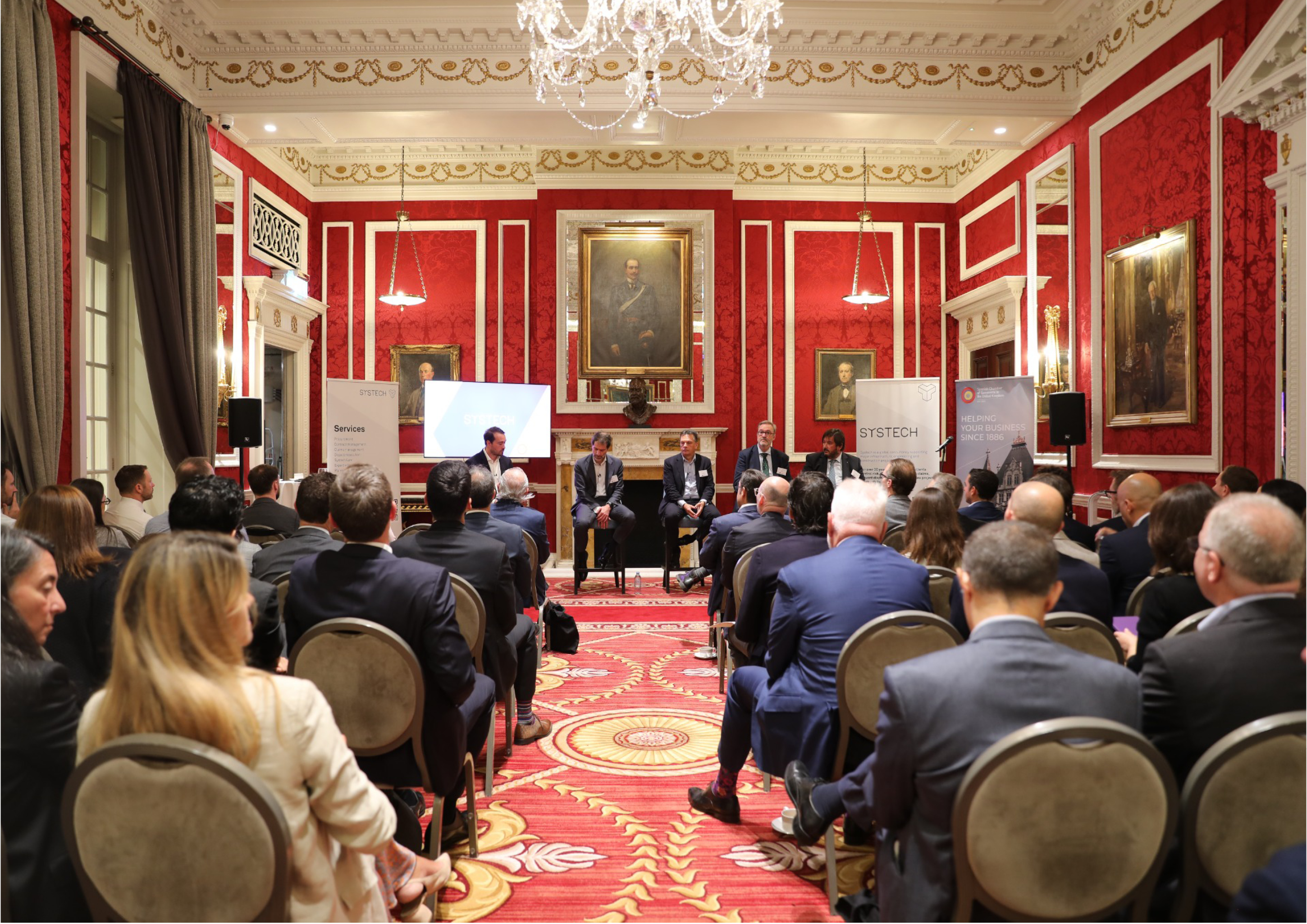
Yesterday, Systech, in partnership with the Spanish Chamber of Commerce in the United Kingdom, welcomed more than 70 senior industry professionals to discuss the evolving role of Spanish contractors in the UK infrastructure market and the challenges shaping the next generation of project delivery.
Representing Systech, Max Woodward-Smith, Associate Director, moderated a distinguished panel featuring:
· Rafael Foulquié Echevarría FRICS FICE – UK & Ireland Commercial & Bidding Director, Ferrovial
· Carlos Arilla de Juana – Former COO, Infrastructure, Acciona
· Alcibíades López Cerón – Business Development Director, Europe, FCC Construcción
· Stephen Holmes – UK & Ireland Managing Director, Dragados
Drawing on decades of experience delivering infrastructure projects across the UK and internationally, the panel explored how Spanish contractors have successfully established themselves within the UK market and what lessons can be learned from their approach to engineering, collaboration, governance and delivery.
The conversation highlighted the growing importance of attracting and developing the next generation of industry talent, the need for sustainable and balanced commercial models, and the role that strong partnerships play in delivering successful project outcomes.
Looking ahead, there was a clear sense of optimism around the opportunities emerging across water, energy transmission, grid infrastructure, mobility, healthcare, data centres and wider social infrastructure, alongside recognition that the industry must continue to evolve if it is to deliver the scale of investment planned over the coming decade.
A huge thank you to our panellists for sharing their insights, to the Spanish Chamber of Commerce in the United Kingdom for partnering with us on the event, and to everyone who joined us and contributed to such an engaging discussion.
At Systech, we remain committed to bringing together industry leaders to share perspectives, challenge conventional thinking and contribute to the ongoing conversation around how infrastructure can be delivered more effectively in the future.